
Science confirms what Project C.U.R.E. volunteers have known all along — helping others heals you, too. Here's what happens inside your brain and body when you serve.
There's a moment that every C.U.R.E. volunteer knows. Maybe it comes when you're sorting surgical instruments, or when you hand a stethoscope to a nurse who hasn't had one in years. Something shifts. The fatigue in your feet disappears. Your chest feels lighter. A quiet, spreading warmth settles in — and you realize you are, without question, exactly where you're supposed to be.
Turns out, that feeling isn't just poetic. It's biochemistry.
Researchers have spent decades measuring what happens to the human body during and after acts of genuine service. The findings are remarkable. For anyone who has volunteered with Project C.U.R.E., they're not entirely surprising.
"Researchers measured hormones and brain activity of volunteers and discovered that being helpful to others delivers pleasure. Human beings are hard-wired to give to others."
When you choose to serve someone else, your brain doesn't stay neutral. It responds generously. A cascade of neurochemicals floods your system, each one doing something quietly extraordinary for your health.
The brain's reward signal. Released during and after volunteering, it creates feelings of motivation and satisfaction — the "helper's high" that keeps you coming back.
Your mood stabilizer. Regular volunteering keeps serotonin levels elevated, reducing the risk of depression and increasing overall emotional resilience.
Sometimes called the "bonding hormone." Released during meaningful human connection, it lowers the stress hormone cortisol and deepens your sense of belonging.
Natural painkillers from the brain's reward center. They create feelings of euphoria and well-being — the same chemicals triggered by exercise and laughter.
Research from the University of Ghent found this hormone rises during volunteer activity, contributing to the sense of calm and stress reduction volunteers often report.
This isn't soft science or feel-good speculation. The clinical data on volunteering is strikingly consistent across populations, age groups, and countries.
40%
Less likely to develop hypertension among adults 50+ who volunteer 200+ hours/year
(Carnegie Mellon University)
2 hrs
Per week is the threshold researchers found produces meaningful mental health benefits
Longer
Life expectancy documented in regular volunteers vs. non-volunteers, even controlling for age and health
(Univ. of Michigan)
A study in Psychology and Aging found that volunteers over 50 have measurably lower blood pressure than their non-volunteering peers. High blood pressure is a primary driver of heart disease and stroke — the leading killers in the developed world. Something about intentional service seems to act as a kind of biological buffer.
Researchers also found that the benefits are not created equal. Volunteering for altruistic reasons — that is, genuinely wanting to help someone else — produced lasting health gains. Volunteering for self-interested purposes? The effect largely disappeared. The heart, it seems, knows the difference.
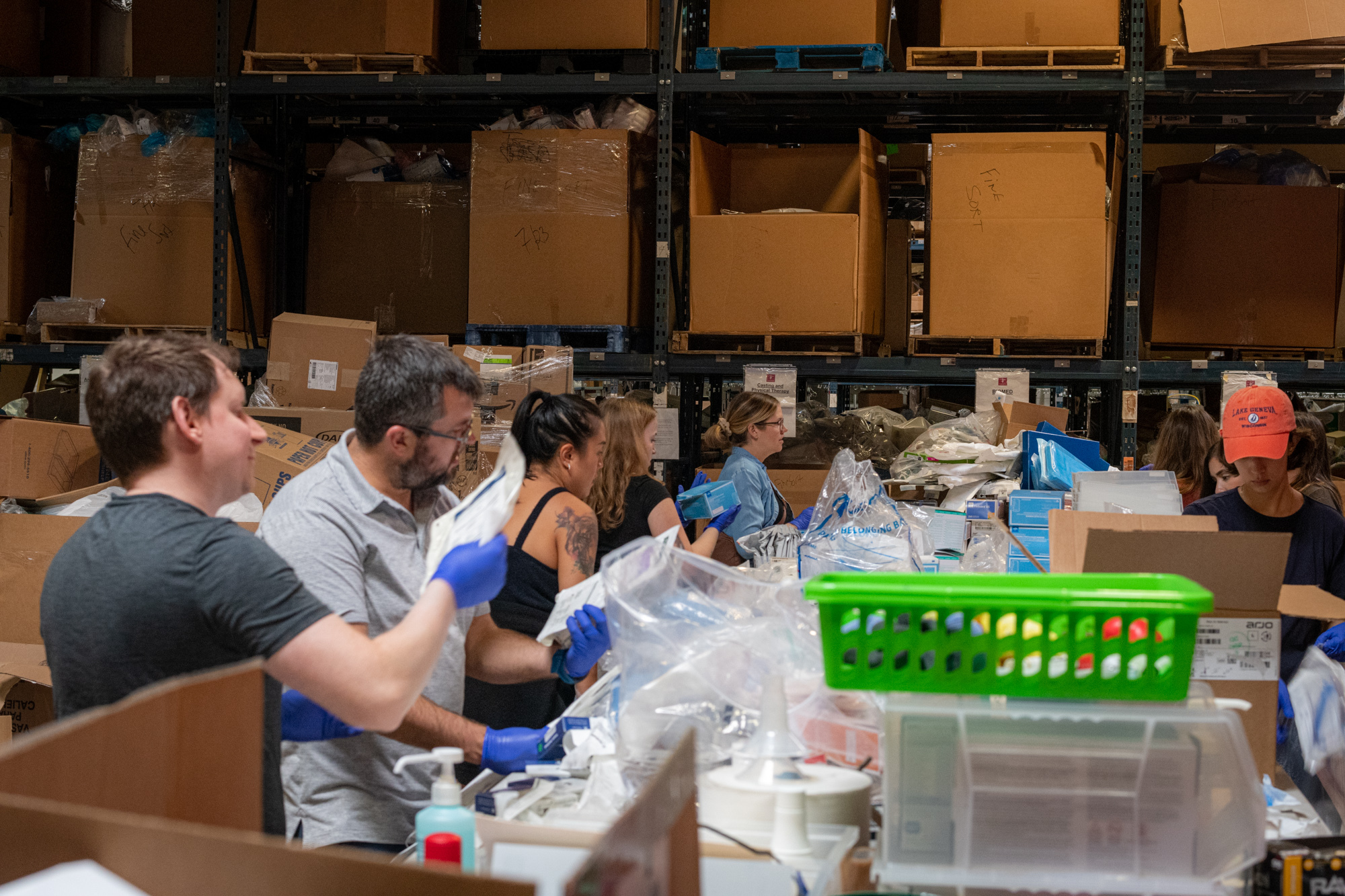
At Project C.U.R.E., we've always known that giving heals on both ends of the transaction. When a volunteer spends time in one of our seven warehouses sorting, cataloguing, packing life saving medical supplies destined to help patients around the world, they're doing more than filling a cargo container. They're participating in something ancient and deeply human: the act of caring for a stranger.
That stranger may be a mother in Zambia who now has the hope for a safer delivery. It may be a doctor in Nepal with access to a stethoscope that will catch a heart murmur before it becomes a crisis. A community health worker in Mongolia who finally has the blood pressure cuffs to do her job.
The biology just confirms what the volunteers already feel walking out of the warehouse: this mattered, and I made a difference.
The research suggests you don't need to overhaul your calendar. Studies consistently point to just two to three hours per week — roughly 100 hours per year — as the threshold for meaningful, measurable health benefits. What matters most is consistency and genuine engagement: showing up regularly for something that stretches your empathy, connects you to others, and reminds you of a world larger than your own.
That's a prescription most of us can fill.
And if you're looking for the right pharmacy — we know a warehouse or two.
Join thousands of Project C.U.R.E. volunteers across the country. Your time, your hands, and your presence can restore health on the other side of the world — and quietly restore your own

