
August 25, 2026 | Project C.U.R.E
San Lucas Tolimán sits on the shores of Lake Atitlán in Guatemala, a community with deep roots in traditional Mayan culture.
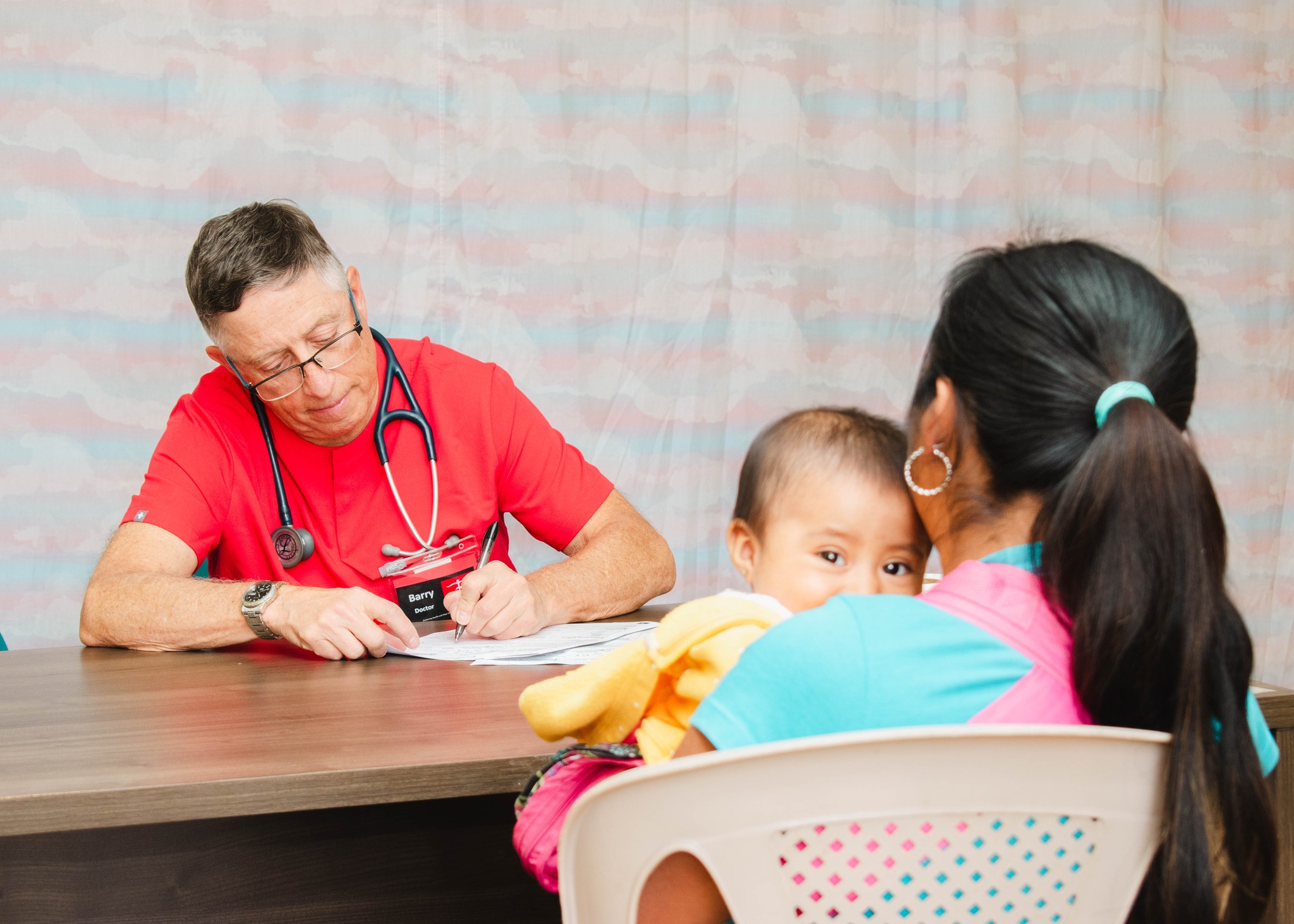
From April 19-26, 2026, a team of 20 volunteers traveled to San Lucas Tolimán with Friends of San Lucas, a nonprofit that funds the locally led Mission of San Lucas Tolimán and its healthcare, education, and community programs. The team included nurses, a physical therapist, an OBGYN, internal medicine doctors, and five pharmacy students from Temple University alongside their pharmacist professor. Some were on their first C.U.R.E. Clinic trip. Others were returning, drawn back by a community that stays with you long after you go home.
By the end of the week, they had seen 351 patients.
The most common complaints told a story about daily life here. Vision changes, eye irritation, and dryness topped the list, followed closely by musculoskeletal pain and headaches. The team ran 240 point-of-care tests, most often checking glucose and screening urine for infection, kidney disease, and diabetes.
Hypertension was the leading diagnosis, found in 13 percent of patients. Back pain and lower extremity pain followed, both closely tied to the physical demands of agricultural work. These aren't one-time fixes. That's why the hospital's community health worker program matters so much. Patients diagnosed with hypertension or diabetes are connected to the hospital's ongoing hypertension club, so care doesn't stop when the Project C.U.R.E. team packs up and flies home.
Stacy Mason, an ICU nurse on the trip, spent the week working triage. On the last day, she met a 15-year-old girl who hadn't eaten in two days and had a rash her mother couldn't explain. The girl's blood pressure was dangerously low for her age. Stacy's instinct told her to check for dengue. She was right, and the lab work also turned up chicken pox and early signs that her kidneys were being affected. The girl was admitted to the hospital that day.
"Words cannot express the impact that one patient encounter had on me," Stacy said. "I've thought about her every day since and will carry the lesson of looking a little deeper with every patient interaction I have going forward."
Chuck Amen, a retired radiology tech, spent the trip fitting patients for glasses, work that carried extra weight in a community where many women support their families through intricate woven textiles that demand sharp eyesight. He remembers Juana, an elderly Kaqchikel-speaking woman whose face lit up when she could see her weaving clearly again. He remembers a 12-year-old boy who stood taller the moment he put on his first pair of glasses.
"These moments went beyond any clinical outcome," Chuck said. "Helping them improve their vision meant restoring independence, dignity, and pride in their work."
For years, the hospital relied on a 22-year-old Logiq-3 ultrasound machine. It needed to be recalibrated and restarted every day and was so outdated that the manufacturer's technical support team couldn't even help troubleshoot it anymore.
This trip, the hospital used a new diagnostic general ultrasound donated through a C.U.R.E. Cargo container. Dr. Tun, the hospital's director, put it simply: the new machine gives mothers and babies a much clearer picture.
That matters in San Lucas Tolimán, where community health leaders are working hard to improve prenatal and antenatal care. Twenty years ago, 70 percent of women in this community gave birth at home. Today, half go to a facility, and half deliver at home. A clear ultrasound image is one more reason for a mother to choose the hospital, and one more way our donors are reaching mothers and babies who need it most.
This trip is a reminder of what's possible when volunteers and local providers, supported by donated medical equipment, work together. A nurse's instinct caught a dangerous illness in time. A retired radiology tech helped a community keep doing the work that sustains it. And a new ultrasound machine is already changing the picture for mothers and babies in San Lucas Tolimán.
Where you live shouldn't determine whether you live. In San Lucas Tolimán, thanks to a dedicated team and the supplies they carried with them, 351 people got a little closer to that promise.

