
February 3, 2026 | Project C.U.R.E
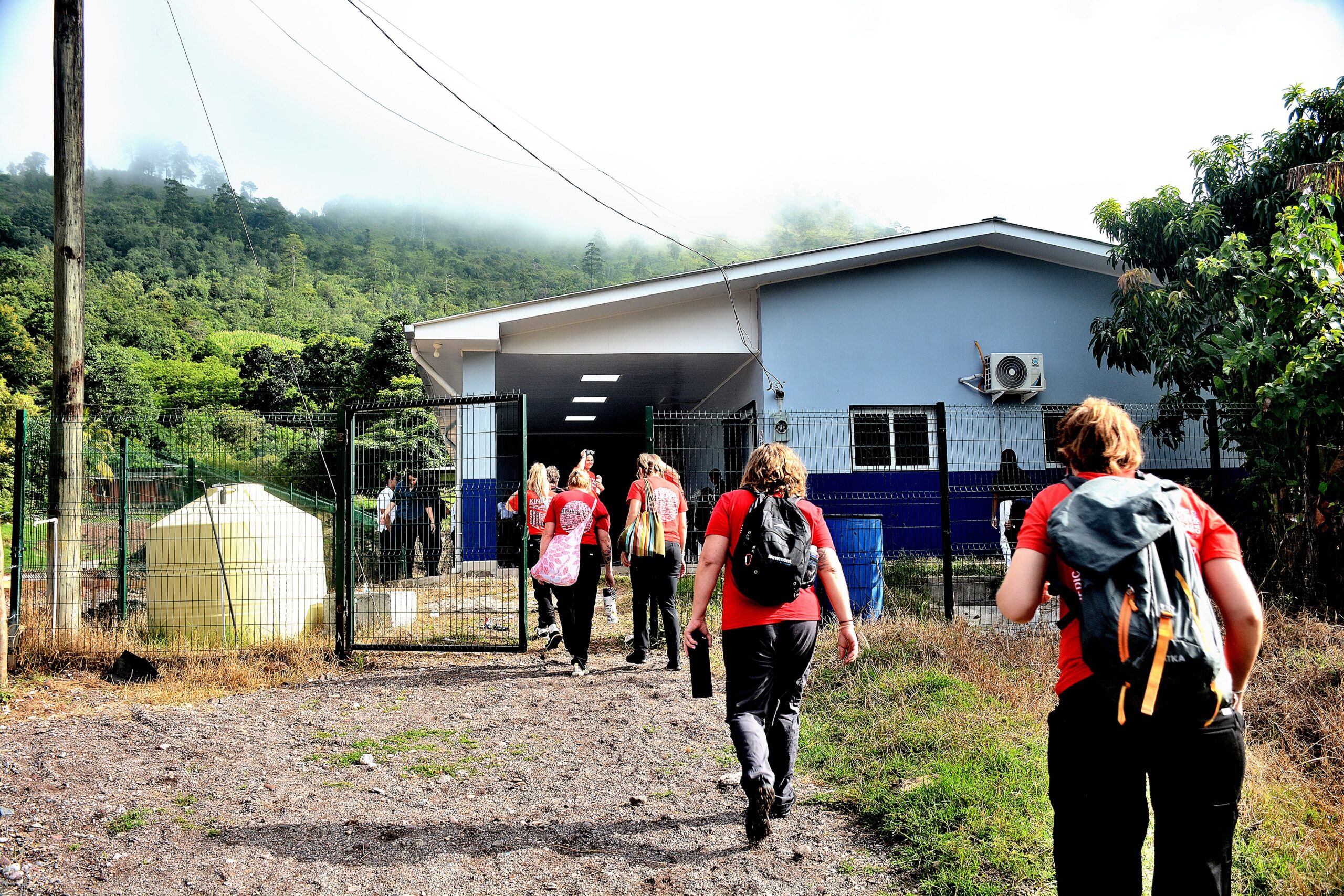
At Project C.U.R.E., we believe that access to quality healthcare is not just about supplies. It is about people. Skilled, compassionate clinicians who are willing to step outside their comfort zones, meet patients where they are, and work alongside local healthcare professionals who will transform lives long after a clinic ends. That belief came to life during a recent C.U.R.E. Clinic trip, made possible through a partnership with HCA HealthONE Rose Medical Center in Colorado.
Among the team sent by HCA HealthOne Rose was Kirsten, an occupational therapist who had never worked in an urgent-care style clinic and was not sure what to expect. Kirsten traveled to Santa Rita, Copan, Honduras, in Partnership with International Hope Builders, seeing 552 patients over 4 days. 1284 medications were administered. What she experienced reaffirmed why specialized clinicians are essential to global healthcare delivery.
Kirsten’s very first patient arrived after traveling more than three hours to reach the clinic.
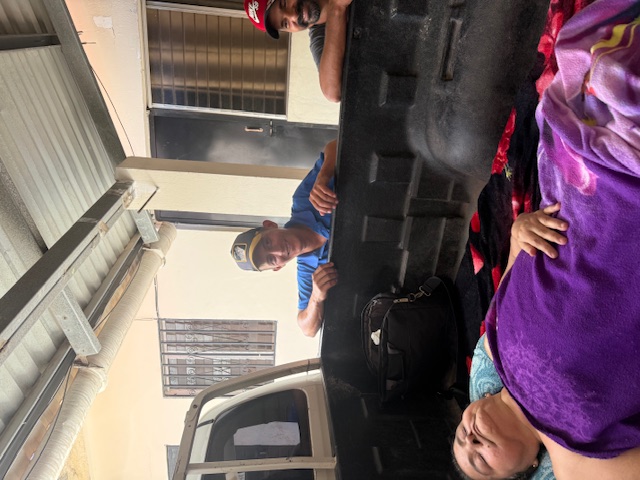
The woman had suffered a severe stroke months earlier and had not been out of bed since. With no access to rehabilitation services, mobility equipment, or transportation, her family brought her in the only way they could. Lying on a pad in the back of a pickup truck.
“She was the very first patient I saw, on the very first day,” Kirsten shared. “And I thought, if this is how this trip is starting, what else is coming?”
The woman was unable to speak or move one side of her body. She was in constant pain, and her family did not know how to care for her safely. Kirsten met her where she was, literally, climbing into the back of the truck to assess her and guide her family.
With the help of an interpreter, Kirsten taught the family how to gently move her joints, reduce pain, and safely position her body. She showed them how simple range-of-motion exercises could prevent further deterioration and how sitting upright could help her rejoin family life, even in small ways.
“It wasn’t about fixing everything,” Kirsten said. “It was about showing them what was possible.”
In a place where rehabilitation services are scarce or nonexistent, that knowledge was life-changing. Kirsten anticipates that the woman should be able to feed herself and might be verbal again if the family continues the therapy techniques they were taught.
Another patient Kirsten met was a woman in her 60s who carried the weight of her entire family and community. She cared for a husband recovering from a stroke, an ill daughter, grandchildren, and neighbors who regularly sought her out for help. She arrived at the clinic with chest pain, headaches, and body pain that seemed impossible to untangle.
Kirsten quickly realized that exercises alone would not address the root of her suffering.
Instead, she taught her something simple, yet unfamiliar: how to breathe.
Using box breathing, a technique commonly taught in the U.S. but entirely new in this rural setting, Kirsten guided her through slowing her breath and calming her nervous system. With the help of an interpreter, they drew the steps on paper and practiced together.
After a few rounds, everything shifted.
“She told me she felt different almost immediately,” Kirsten said. “Then she said something I’ll never forget. She told me people in her village come to her for massage, and now she could teach them this breathing technique too.”
One moment of care became a ripple effect for an entire community.
Kirsten was the only occupational therapist on the trip, while the top chief complaint was musculoskeletal, with 19.93% of patients reporting aches, pain, or stiffness in their joints and muscles. Her presence filled a gap that could not have been met by general care alone. From stroke rehabilitation to mental health support through breathing and sensory regulation, her expertise addressed needs that patients did not even know could be treated.
This is why Project C.U.R.E. Clinics are stronger when specialists join the team. Physical therapists, occupational therapists, chiropractors, nurses, midwives, biomedical technicians, and other clinicians bring skills that expand what is possible for patients and local providers alike.
It is not about replacing local healthcare systems. It is about empowering them.
HCA HealthOne Rose and the Guber Family Foundation fully sponsored five clinicians to participate in this clinic trip, covering every cost. The group, made up of four nurses and Kirsten, had never worked all together before. By the end of the trip, they had formed a bond strong enough to apply together for another C.U.R.E. Clinic in Ethiopia.
This partnership has already grown beyond a single trip. Rose Medical Center is now committed to making this a local initiative, setting an example for what hospital-led global engagement can look like.
“It makes me proud to work for a hospital that values this kind of service,” Kirsten shared. “This is the kind of organization I want to be part of.”
Around the world, hospitals and clinics are asking for help. They are not asking for someone to take over. They are asking for partners who will listen, share knowledge, and provide tools that make their work easier.
We invite hospitals, healthcare systems, and clinical leaders to follow in R
ose Medical Center's footsteps.
Send your specialists.
Support your clinicians.
Expand your impact beyond your walls.
When expertise travels, the impact lasts far beyond the clinic doors.
If your hospital is interested in partnering with Project C.U.R.E. to send clinicians on a C.U.R.E. Clinic trip, we would love to connect. Together, we can bring health & hope to the right places, at the right time.

